ADA Compliant Portable Toilets: Understanding Door Maneuvering Clearances
When individuals ask whether an ada certified portable bathroom is "big enough," they are normally asking the wrong question.
Size matters, obviously, but it is only part of the tale. A mobile device can look roomy from the outdoors and still stop working the individual that needs to enter, shut the door, rearrange, and leave without stress or risk. That is where door maneuvering clearances come to be so crucial. They sit at the junction of self-respect, security, and plain practicality.
If you deal with momentary toilets often, you discover quickly that access problems hardly ever introduce themselves in a spec sheet. They appear when a guest in a wheelchair can not angle into the entrance cleanly. They appear when somebody requires more room to manage the door than the setup enables. They turn up when a system that appeared penalty in the yard comes to be hard to make use of when it is gone down onto soft ground or crowded right into a limited row at an event.
For ada compliant portable toilets, the government framework is clear on the huge image. The regulating criterion in the United States is the 2010 ADA Standards for Accessible Design, as interpreted by the Access Board and the Division of Justice. Mobile obtainable systems need an available path and entryway. They must meet toilet-room technological needs, including turning room, component clearances, appropriate grab bar and water closet clearance regulations, and door handling clearances. That last piece is simple to overlook until you understand the amount of accessibility failures begin and end at the door.
The door is not a small detail
An entrance is not merely an opening in a wall surface. For lots of individuals, it is the hardest part of the experience.
Think regarding what takes place in actual usage. A person approaches the unit, placements themselves to run the door, handles the swing, gets in while maintaining balance or wheelchair tool control, after that shuts the door behind them. Later on, they duplicate the process in reverse. If there is not enough area to navigate on either side of that door, the issue is not aesthetic. The unit can come to be discouraging, tiring, or effectively unusable.
That is why the ADA technical requirements deal with door maneuvering as component of accessibility, not as a great additional. An ada easily accessible mobile toilet needs to operate in activity, not just on paper.
People in some cases assume that if the interior has enough transforming space, the task is https://pristineportablesil.com/portable-sink-rental/ done. In technique, the path via the entrance matters just as much. You can have decent indoor space and still develop a disappointment if the access condition forces unpleasant positioning. This turns up typically at fairs, outdoor weddings, community celebrations, jobsite assistance locations, and emergency situation feedback arrangements where every foot of positioning room feels precious.
The temptation is constantly to put the ada mobile toilet versus a fence line, generator, barrier, or adjacent unit to save space. That is typically the moment navigating clearance begins to disappear.
What the requirements need, in simple language
The confirmed government advice tells us numerous points that matter here.
Portable available systems have to fulfill the toilet-room technical demands, and that consists of door maneuvering clearances. They also require an available course and entryway, and if ramps or touchdowns are required, those aspects should abide by ADA technological demands as well. For collections of mobile single-user toilets, at least 5 percent of the units in each collection must be accessible, and that guideline uses also at short-lived events. Available units must likewise be identified with the International Symbol of Accessibility.
Those demands audio straightforward, however the area conditions are where judgment issues. Door maneuvering clearance is not only about the unit itself. It is additionally about how and where the unit is put. A certified unit can be threatened by a bad format. A thoughtful design can protect ease of access also on a challenging site.
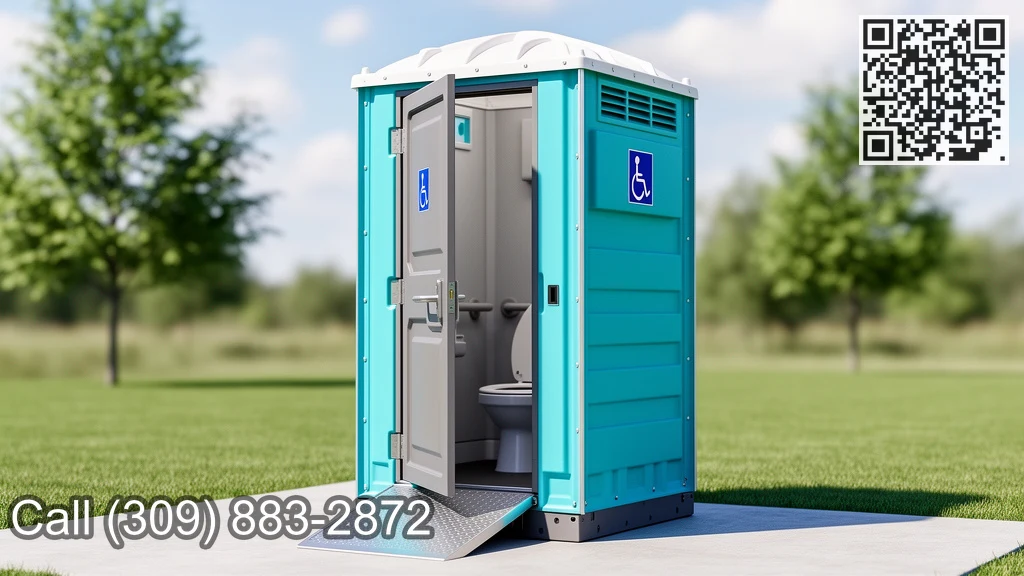
That is the part several customers, organizers, and also some skilled crews miss. Conformity is not simply a matter of buying an ada-compliant portable commode. It is additionally a matter of installing it in a way that enables the called for access attributes to work as intended.
Where tasks go wrong
The most usual problems with an ada compliant portable commode leasing do not normally originated from bad intents. They originate from rushed preparation, crowded sites, and assumptions.
A mobile restroom service provider might send out an appropriate system, however the shipment area is muddy, sloped, or separated by cables and temporary secure fencing. An event coordinator may reserve ada certified easily accessible mobile bathrooms, however position them at the much side of the website where the course is difficult or blocked. A construction manager might comprehend that one device needs to be obtainable, but not believe very carefully regarding just how the door actually runs as soon as the unit is surrounded by devices or piled materials.
Door maneuvering clearances are especially vulnerable due to the fact that they are invisible to people that do not require them. If you are able-bodied, it is easy to consider a system and assume, "There is lots of area." However handling is not gauged by aesthetic impression alone. It depends on strategy, reach, positioning, door procedure, and useful space before and after passing through the opening.
This is one reason accessibility complaints typically include arrangements that appeared affordable to everyone on site up until a person attempted to utilize them under genuine conditions.
Placement can make or break an obtainable portable restroom
The obtainable path is part of the same discussion as the door. If a person can not approach the entrance appropriately, steering clearance ends up being theoretical.
Imagine an ada handicap easily accessible mobile bathroom put at the end of a row on portable gravel. If the path to it is steady and unhampered, and the area around the entrance is preserved so the door can be handled pleasantly, the system has a dealing with possibility of performing as planned. Move that exact same system onto uneven ground, group it tightly against obstacles, or leave no functional space around the access, and the customer might struggle before also going across the threshold.
I have actually seen arrangements where the obtainable system was technically present, clearly labeled, and still functionally poor because a trash bin, handwash station, or short-lived indicator structure had crept into the strategy location. Nobody thought of those items as barriers. For the individual, they absolutely were.
This is where empathy issues. Access is not regarding examining whether the device showed up. It is about asking whether a person can utilize it separately and with practical ease.
Temporary occasions still count
A surprising variety of individuals think ADA expectations loosen up when an event is short-term. They do not.
The Gain access to Board assistance explains that for clusters of mobile single-user toilet devices, a minimum of 5 percent in each cluster should come, and this applies also at short-lived occasions. That matters for concerts, races, food celebrations, area celebrations, election-day assistance locations, and calamity reaction staging. A brief duration does not erase the obligation to offer access.
Door handling clearances are particularly important in occasion settings since momentary designs typically squeeze circulation. Tents go up. Barricades change. Solution roads slim. Lines develop in position no one anticipated. What looked sufficient on a tidy website map can come to be challenging after setup.
The practical lesson is straightforward. If you are intending a financial institution of mobile systems, do not treat the easily accessible device as the one that can take in all the remaining spatial concessions. It requires space to work, specifically at the entrance.
Why this matters for self-respect, not just compliance
People who rely upon easily accessible functions observe instantly when a washroom has been dealt with as an afterthought.
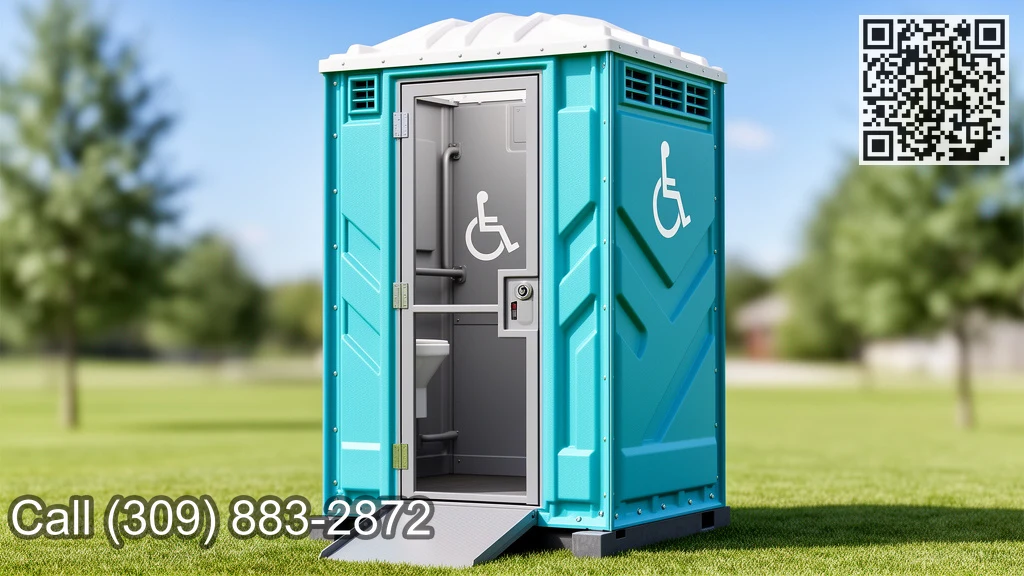
The experience can be inhibiting in a way that is difficult if you have actually never managed it yourself. A guest might arrive at a wedding and understand the "easily accessible" toilet is there only in name. A parent assisting an adult kid may find the door location is so cramped that every movement ends up being uncomfortable. A person attending a public occasion may choose to leave early as opposed to deal with the initiative and humiliation of trying to make use of an inadequately placed unit.
This is not abstract. Restroom access forms whether people remain, participate, work comfortably, and feel welcome.
An ada mobile commode is usually discussed as tools. It is also friendliness. It is incorporation. It is threat monitoring, yes, yet it is likewise respect.
The distinction between buying the right device and utilizing it correctly
Many investing in teams focus on item labels. They search for phrases like ada compliant mobile commodes, ada-compliant portable bathrooms, or ada mobile bathroom rental, then assume the tag addresses the issue. It does not.
The best unit is just the beginning point. The field arrangement has to preserve the accessible features that device was designed to give. That includes the path to the washroom, the entrance condition, and the usability of the door.
A mobile toilet can shed functional ease of access in a number of ways after shipment:
- It is positioned where the approach is obstructed by secure fencing, bins, cords, or event furniture.
- The ground or landing area at the entryway is not appropriate for a tidy, secure approach.
- The device is crowded so securely versus various other temporary structures that the door location comes to be challenging to use.
- Site modifications after distribution produce new barriers that were not present during placement.
- Staff presume signs alone makes the system accessible.
None of those failures call for a malfunctioning toilet. They come from choices around it.
Door maneuvering clearances are part of the customer journey
It helps to think of the washroom experience as a sequence rather than a single object.
An individual has to find the obtainable unit, reach it by an available route, approach the entrance, handle the door, get in, use the components, rearrange as needed, and exit safely. If one step breaks down, the entire experience breaks down.
That is why the requirements team door steering clearances along with other toilet-room technical needs. They belong in the same group of essentials as turning room and fixture clearances. They are not decorative design choices. They are what make independent usage possible.
In portable settings, this can be much more fragile than in irreversible construction due to the fact that the atmosphere alters so swiftly. Rainfall alters surface areas. Groups press versus temporary secure fencing. Vendors expand their footprint. Web traffic cones migrate. Solution shipments obstruct paths. The accessible problem requires to be protected throughout the occasion or rental duration, not just attained at drop-off.
Questions worth asking before distribution day
A lot of headaches can be prevented by a short, sincere planning discussion. If you are leasing an ada-compliant mobile toilet, you need to know more than whether one is readily available. You want to know whether your site can sustain its obtainable use.
The best planners I deal with do not begin by requesting the most affordable device or the narrowest footprint. They begin by defining the website, the target market, the most likely traffic pattern, and that will certainly keep track of problems after setup. That leads to far better decisions.
Here are the concerns I would certainly raise early with any portable washroom supplier or website lead:
- Where will certainly the easily accessible course start, and that is accountable for keeping it clear?
- What is the exact positioning plan around the doorway, not just around the device as a whole?
- Will any ramps or touchdowns be required, and if so, how will compliance be handled?
- How will the available unit be identified on site so individuals can find it easily?
- Who will examine after setup that bordering things have not endangered the entryway area?
That sort of discussion is much more valuable than merely duplicating ada mobile toilet needs as a phrase. Needs live or pass away in the details of positioning and maintenance.
Special note on building sites
There is one nuance that can produce complication. The older 1991 ADA common notable mobile toilet devices at building and construction sites utilized solely by building and construction employees, which were excluded from the portable-toilet accessibility scoping requirement referenced there. That does not imply every construction-related portable commode question goes away under a covering exemption, and it certainly does not transform the broader rule for general mobile bathroom services and temporary public-facing situations.
What matters in method is understanding the usage situation. If you are handling general leasings, public occasions, or portable toilet clusters serving guests or a broader individual base, accessible-unit requirements remain quite in play. It is not wise to think that "short-term" or "jobsite nearby" suggests access can be ignored.
Because the line between workforce use, visitor access, and public holiday accommodation can get jumbled fast, mindful preparation is typically the better path.
A note concerning enforcement and interest to detail
Accessibility compliance is not getting less important. If anything, the wider conformity setting maintains advising organizations that ADA commitments continue to obtain serious attention across sectors. That matters due to the fact that restroom accessibility is typically managed by the same organizations that are managing lots of other conformity responsibilities.
What I extract from that is not fear, yet point of view. The information issue. An obtainable portable washroom is not a token item to please a checklist. It is part of a pattern of operational care. Teams that are disciplined regarding access in one location have a tendency to be much more disciplined in others.
When I see a website where the accessible unit has a clear route, a sensible placement, noticeable identification, and an entry location maintained cost-free for real handling, it usually informs me something encouraging about the entire procedure. Someone assumed it through. Somebody anticipated genuine people to use it.
The human criterion behind the technical standard
It is simple to get shed in the vocabulary of laws and product classifications: ada compliant mobile bathrooms, ada-compliant mobile bathrooms, ada certified portable bathroom, ada easily accessible mobile bathroom. Those terms aid throughout purchase, but they can additionally make the problem feel remote and bureaucratic.
The better inquiry is extra direct. Can an individual use this toilet without unneeded struggle?
Door maneuvering clearances sit ideal inside that inquiry. They are not a side concern. They are one of the practical problems that determine whether accessibility is genuine.
If you are renting out systems for an occasion, ask to stroll the site from the customer's point of view prior to opening. If you are the supplier, do not quit at shipment. Take a look at the entry location the method a new customer would. If you are the organizer, protect that room once the site obtains active. Access can be undone by one careless placement of a barrel, indication, or pile of supplies.
An ada compliant portable toilets plan is successful when nobody needs to suggest concerning whether the accessible system "matters." It is clearly reachable, obviously functional, and obviously intended for real human needs.
That is the standard worth going for. Not since it seems good in a contract, but since it saves individuals the tiring experience of getting to a toilet that guaranteed gain access to and provided obstacles instead.
 Ask ChatGPT
 Ask Grok
 Ask Perplexity
 Ask Claude
 Ask Google AI
 Ask You
Corrections
Spot something wrong? Send it to the desk and it gets fixed in the open.